WHEN Peter Wanderwide was young
He wandered everywhere he would:
All that he approved was sung,
And most of what he saw was good.
When Peter Wanderwide was thrown
By Death himself beyond Auxerre,
He chanted in heroic tone
To priests and people gathered there:
"If all that I have loved and seen
Be with me on the Judgment Day,
I shall be saved the crowd between
From Satan and his foul array.
"Almighty God will surely cry,
'St. Michael! Who is this that stands
With Ireland in his dubious eye,
And Perigord between his hands,
"'And on his arm the stirrup-thongs,
And in his gait the narrow seas,
And in his mouth Burgundian songs,
But in his heart the Pyrenees?'
"St. Michael then will answer right
(And not without angelic shame),
'I seem to know his face by sight:
I cannot recollect his name . . . . ?'
"St. Peter will befriend me then,
Because my name is Peter too:
'I know him for the best of men
That ever walloped barley brew.
"'And though I did not know him well
And though his soul were clogged with sin,
I hold the keys of Heaven and Hell.
Be welcome, noble Peterkin.'
"Then shall I spread my native wings
And tread secure the heavenly floor,
And tell the blessed doubtful things
Of Val d'Aran and Perigord."
_________
This was the last and solemn jest
Of weary Peter Wanderwide.
He spoke it with a failing zest,
And having spoken it, he died.
~Hilaire Belloc
Wednesday, February 5, 2014
Monday, February 3, 2014
On Bridges
STAND on the side of a stream and consider two things: the imbecility of your private nature and the genius of your common kind.
For you cannot cross the stream, you—Individual you; but Man (from whence you come) has found out an art for crossing it. This art is the building of bridges. And hence man in the general may properly be called Pontifex, or "The Bridge Builder"; and his symbolic summits of office will carry some such title.
Here I will confess (Individual) that I am tempted to leave you by the side of the stream, to swim it if you can, to drown if you can't, or to go back home and be eaten out with your desire for the ulterior shore, while I digress upon that word Pontifex, which, note you, is not only a name over a shop as "Henry Pontifex, Italian Warehouseman," or "Pontifex Brothers, Barbers," but a true key-word breeding ideas and making one consider the greatness of man, or rather the greatness of what made him.
For man builds bridges over streams, and he has built bridges more or less stable between mind and mind (a difficult art!), having designed letters for that purpose, which are his instrument; and man builds by prayer a bridge between himself and God; man also builds bridges which unite him with Beauty all about.
Thus he paints and draws and makes statues, and builds for beauty as well as for shelter from the weather. And man builds bridges between knowledge and knowledge, co-ordinating one thing that he knows with another thing that he knows, and putting a bridge from each to each. And man is for ever building—but he has never yet completed, nor ever will—that bridge they call philosophy, which is to explain himself in relation to that whence he came. I say, when his skeleton is put in the Museum properly labelled, it shall be labelled not Homo Sapiens, but Homo Pontifex; hence also the anthem, or rather the choral response, "Pontificem habemus," which is sung so nobly by pontifical great choirs, when pontifications are pontificated, as behooves the court of a Pontiff.
Nevertheless (Individual) I will not leave you there, for I have pity on you, and I will explain to you the nature of bridges. By a bridge was man's first worry overcome. For note you, there is no worry so considerable as to wail by impassable streams (as Swinburne has it). It is the proper occupation of the less fortunate dead.
Believe me, without bridges the world would be very different to you. You take them for granted, you lollop along the road, you cross a bridge. You may be so ungrateful as to forget all about it, but it is an awful thing!
A bridge is a violation of the will of nature and a challenge. "You desired me not to cross," says man to the River God, "but I will." And he does so: not easily. The god had never objected to him that he should swim and wet himself. Nay, when he was swimming the god could drown him at will, but to bridge the stream, nay, to insult it, to leap over it, that was man all over; in a way he knows that the earthy gods are less than himself and that all that he dreads is his inferior, for only that which he reveres and loves can properly claim his allegiance. Nor does he in the long run pay that allegiance save to holiness, or in a lesser way to valour and to worth.
Man cannot build bridges everywhere. They are not multitudinous as are his roads, nor universal as are his pastures and his tillage. He builds from time to time in one rare place and another, and the bridge always remains a sacred thing. Moreover, the bridge is always in peril. The little bridge at Paris which carried the Roman road to the island was swept away continually; and the bridge of Staines that carried the Roman road from the great port to London was utterly destroyed.
Bridges have always lived with fear in their hearts; and if you think this is only true of old bridges (Individual), have you forgotten the Tay Bridge with the train upon it? Or the bridge that they were building over the St. Lawrence some little time ago, or the bridge across the Loire where those peasants went to their death on a Sunday only a few months since? Carefully consider these things and remember that the building and the sustaining of a bridge is always a wonderful and therefore a perilous thing.
No bridges more testify to the soul of man than the bridges that leap in one arch from height to height over the gorge of a torrent. Many of these are called the Devil's Bridges with good reason, for they suggest art beyond man's power, and there are two to be crossed and wondered at, one in Wales in the mountains, and another in Switzerland, also in the mountains. There is a third in the mountains at the gate of the Sahara, of the same sort, jumping from rock to rock. But it is not called the Devil's Bridge. It is called with Semitic simplicity "El Kantara," and that is the name the Arabs gave to the old bridges, to the lordly bridges of the Romans, wherever they came across them, for the Arabs were as incapable of making bridges as they were of doing anything else except singing love songs and riding about on horses. "Alcantara" is a name all over Spain, and it is in the heart of the capital of Portugal, and it is fixed in the wilds of Estremadura. You get it outside Constantine also where the bridge spans the gulf. Never did an Arab see bridges but he wondered.
Our people also, though they were not of the sort to stand with their mouths open in front of bridges or anything else, felt the mystery of these things. And they put chapels in the middle of them, as you may see at Bale, and at Bradford-upon-Avon, and especially was there one upon old London Bridge, which was dedicated to St. Thomas a Becket, and was very large. And speaking of old London Bridge, every one in London should revere bridges, for a great number of reasons.
In the first place London never would have been London but for London Bridge.
In the second place, bridges enable the people of London to visit the south of the river, which is full of pleasing and extraordinary sights, and in which may be seen, visibly present to the eye, Democracy. If any one doubts this let him take the voyage.
Then again, but for bridges Londoners could not see the river except from the Embankment, which is an empty sort of place, or from the windows of hotels. Bridges also permit railways from the south to enter London. If this seems to you a commonplace, visit New York or for ever after hold your peace.
All things have been degraded in our time and have also been multiplied, which is perhaps a condition of degradation; and your simple thing, your bridge, has suffered with the rest. Men have invented all manner of bridges: tubular bridges, suspension bridges, cantilever bridges, swing bridges, pontoon bridges, and the bridge called the Russian Bridge, which is intolerable; but they have not been able to do with the bridge what they have done with some other things: they have not been able to destroy it; it is still a bridge, still perilous, and still a triumph. The bridge still remains the thing which may go at any moment and yet the thing which, when it remains, remains our oldest monument. There is a bridge over the Euphrates--I forget whether it goes all the way across--which the Romans built. And the oldest thing in the way of bridges in the town of Paris, a thing three hundred years old, was the bridge that stood the late floods best. The bridge will remain a symbol in spite of the engineers.
Look how differently men have treated bridges according to the passing mood of civilization. Once they thought it reasonable to tax people who crossed bridges. Now they think it unreasonable. Yet the one course was as reasonable as the other. Once they built houses on bridges, clearly perceiving that there was lack of room for houses, and that there was a housing problem, and that the bridges gave a splendid chance. Now no one dares to build a house upon a bridge, and the one proceeding is as reasonable as the other.
The time has come to talk at random about bridges.
The ugliest bridge in the world runs from Lambeth to the Horseferry Road, and takes the place of the old British trackway which here crossed the Thames. About the middle of it, if you will grope in the mud, you may or may not find the great Seal of England which James II there cast into the flood. If it was fished up again, why then it is not there. The most beautiful bridge in London is Waterloo Bridge; the most historic is London Bridge; and far the most useful Westminster Bridge. The most famous bridge in Italy to tourists is the old bridge at Florence, and the best known from pictures the Bridge of Sighs in Venice. That with the best chance of an eternal fame is the bridge which carries the road from Tizzano to Serchia over the gully of the muddy Apennines, for upon the 18th of June, 1901, it was broken down in the middle of the night, and very nearly cost the life of a man who could ill afford it. The place where a bridge is most needed, and is not present, is the Ford of Fornovo. The place where there is most bridge and where it is least needed is the railway bridge at Venice. The bridge that trembles most is the Bridge of Piacenza. The bridge that frightens you most is the Brooklyn Bridge, and the bridge that frightens you least is the bridge in St. James's Park; for even if you are terrified by water in every form, as are too many boastful men, you must know, or can be told, that there is but a dampness of some inches in the sheet below. The longest bridge for boring one is the railway bridge across the Somme to St. Valery, whence Duke William started with a horseshoe mouth and very glum upon his doubtful adventure to invade these shores—but there was no bridge in his time. The shortest bridge is made of a plank, in the village of Loudwater in the county of Bucks, not far from those Chiltern Hundreds which men take in Parliament for the good of their health as a man might take the waters. The most entertaining bridge is the Tower Bridge, which lifts up and splits into two just as you are beginning to cross it, as can be testified by a cloud of witnesses. The broadest bridge is the Alexandre III Bridge in Paris, at least it looks the broadest, while the narrowest bridge, without a shadow of doubt, is the bridge that was built by ants in the moon; if the phrase startles you remember it is only in a novel by Wells.
The first elliptical bridge was designed by a monk of Cortona, and the first round one by Adam....
But one might go on indefinitely about bridges and I am heartily tired of them. Let them cross and recross the streams of the world. I for my part will stay upon my own side.
~Hilaire Belloc: On Something.

Saturday, February 1, 2014
Poem: February
The winter moon has such a quiet car
That all the winter nights are dumb with rest.
She drives the gradual dark with drooping crest,
And dreams go wandering from her drowsy star.
Because the nights are silent, do not wake:
But there shall tremble through the general earth,
And over you, a quickening and a birth.
The sun is near the hill-tops for your sake.
The latest born of all the days shall creep
To kiss the tender eyelids of the year;
And you shall wake, grown young with perfect sleep,
And smile at the new world, and make it dear
With living murmurs more than dreams are deep.
Silence is dead, my Dawn; the morning's here.
~Hilaire Belloc
The Month of February, by Abel Grimmer (c.1570–c.1620).
Oil on panel, private collection.
Oil on panel, private collection.
Friday, January 31, 2014
On John Calvin
Concerning the great revolt or Reformation, Hilaire Belloc says:
“THE explosion would not have had a constructive result but for the appearance about ten years after the first Lutheran protest of a book—and behind that book a mind—which was to dominate all the future of the rebellion against Catholic unity.
"It was a book from the pen of a certain northern Frenchman, by the name of Jean Cauvin, or Chauvin, in the Latin Calvinus, whom his followers now know everywhere as John Calvin. He it was who erected a counter-church well organized and defined and therefore capable of expansion and endurance. He set up as the foundation of that church a surely developed, well expounded and argued philosophical system which is still so well known as to need no special description here. It is enough to say that he recognized only one will in the universe—the Divine Will—that he tended, therefore to ascribe not only good, but evil operations to that Will and emphasized the Divine Majesty so strongly as to get the right relations of God to man out of proportion; that he weakened in man—one may say virtually denied the power of free will, stressing out of reason (but with powerful effect) the role of predestination. Man’s good deeds, proceeding from no free will, were of no effect towards the salvation of man’s soul.
"Inspired by this general doctrine was to be organized a new Church which was actually the creation of Calvin’s mind, but which he and his followers enthusiastically built up, on the plea that it was a return to what the true Church had been in its original purity. He proposed an ecclesiastical system in which each congregation elected its minister, the corporation of ministers forming a synod or collective body summonable upon occasion and the whole body of clergy and laity so defined constituting what he called “the Church,” the whole thing being built up of individual congregations which were called “the Churches.”
"Within these the Eucharist continued in a form, the exact definition of which was still debated, but which excluded the old sacramental idea as idolatrous—in other words, Calvin’s construction destroyed and abhorred the Mass, which had been from immemorial time everywhere the central act of Christendom.
"Like all other reformers, he set up, but with more precision than many of them, the Scriptures as the sole rule of faith accepting, by a curious irony, for an absolute that which could in the nature of things have no authority at all, save for the tradition of the Catholic Church he was attacking. For no one in all these centuries would have regarded the Scriptures as possessing Divine authority or would have called them the word of God had not the Catholic Church insisted on that mystical doctrine. It was even the Church which had decided what should be and should not be included within the term of Scripture.”
~Hilaire Belloc: From The Crisis of Civilization.
Belloc lectures Chesterton on “the errors of Geneva.”
Caricature by Max Beerbohm (1872–1956)
Caricature by Max Beerbohm (1872–1956)
Usury
When Bonds are Issued to Yield a Profit Out of Destruction, or Exact Interest From Non-Productive Investment, the Evil Will Eat Society Up. Denounced by Ancient Pagans and Christian Moralists Alike, Usury Has Become a Term Almost Forgotten Although Its Practice Is of Daily Experience.
I NOW go on to talk of the plague of monopoly, which is one of the very worst results of modern capitalism, and is ruining society quite as much as the burning sense of injustice suffered by the worker under capitalism. I shall speak of the monopoly of production gradually killing men’s choice in what goods they shall enjoy; the monopoly of distribution, gradually killing men’s choice of where they shall buy and of whom; the virtual monopoly of credit, through the concentration of banking and the stranglehold of the bankers on the modern capitalistic world.
But before we can understand the growing monopoly of credit we must understand “Usury”.
First, let us understand what we are talking about. The word “Usury” is used today in two very different senses. It is used to mean excessive interest on money: that is the popular meaning of the word. It is also used to mean “interest on money as distinguished from profit: any interest,” large or small, demanded for the “use of money” as distinguished from payments for goods or services and from profit on trade. This is the strict original meaning of the word “Usury” and in that sense I use it here: interest on money or credit alone.
It is a strange thing that though Usury has been denounced as an accursed sin, a destruction of society, ever since human society has existed, it has in modern times been left alone, and, until quite lately, was not seriously discussed. It was taken for granted that Usury was quite natural and would do no harm. The ancient pagan philosophers denounced it; the Christian Church denounced it vigorously from the appearance of this Church until the Reformation. All our moral theologians have denounced it. And yet, for a time, after the seventeenth century, until quite recently, Usury was more and more accepted until it became a matter of course. Only when the enormous harm that it has done was beginning to be felt was the question raised again.
Now, Usury being the taking of interest on money merely “as money”, why is that wrong or harmful? Money is a social instrument devised for the exchange of goods. Its proper function is to work as currency. It does not breed. There is no natural profit attaching to it merely as money. If you keep it back from general circulation and take advantage of having it thus in your power and say to the man who needs to buy or sell “You shall not have this necessary currency unless you pay me still more money for the use of it” you are doing wrong.
The principle of taking Usury once admitted, Usury would end by eating up society. A few dollars lent out at compound interest for a few generations would demand a tribute more than all the wealth of the world could meet. A sum of money lent at 5 per cent doubles, at compound interest, in just over 14 years. The debt increases “a thousandfold” in 144 years; in 288 years “a millionfold!” In 432 years it increases “a billionfold”—one thousand million times! One cent put out at such interest when Columbus landed would now claim over $20,000,000.
But clearly you are doing no wrong if you put your wealth into some profitable enterprise and claim a portion of the profit thereon. That is where the confusion lies.
Supposing a man own a piece of land through which, deep down, runs a rich vein of copper ore. The amount of ore that could be extracted in a year’s labor would be worth, by the time he got it to the surface, $100,000. But to get it to the surface needs instruments and reserves of food and clothing and housing and the rest of it to maintain human energy while the ore is being extracted.
The owner of the vein had nothing. He gets a partner with $500,000 and his partner buys the required machinery and reserves of food, etc., so that the work can be undertaken. He bargains to halve, at the end of the year, the value of the ore extracted: that is, $50,000: one-tenth of the amount that he has put up as capital. The other $50,000 of ore is to be kept by the owner of the land. Year after year one goes on taking his share as capitalist. He is getting to one percent on his capital. But the other man has the advantage of “his” share, which he could never have had without the help of his partner. The contract is perfectly just.
Now suppose after 20 years the mine peters out. There is no more profit to be shared and therefore the original contract comes to an end from a lack of matter.But supposing the contract were worded so that the capitalist did not get his 10 percent as part of the profit, but got it as interest on money lent: not as instruments and reserves of food, etc., lent. Then he has a perpetual claim to $50, 000 a year, payable out of wealth that is not there. This is called “interest on the unproductive loan” and such interest is Usury. To pay that tribute the borrower has to get further and further into debt or to sell other wealth of his, until he is ruined; and that is how Usury eats up society.
Now when money claims interest “merely because it is money and without reference to the way that money is used,” a large proportion of the interest must always be interest on what has become an unproductive loan. Part of the vast sums paid to the money lenders annually represents real profit, real wealth, real goods. But part will always represent, if money lending instead of partnership is at work, interest on a loan which has become, or was from the beginning unproductive.
For instance, nearly all the great war loans demand interest on an unproductive loan. The money was spent in buying goods which were consumed, not in producing more wealth, but in producing no wealth—or even in destroying wealth. It went to support soldiers and sailors who produced no wealth and often actually destroyed wealth. It went to buy guns and ammunition which produce no wealth, but were actively employed in destroying wealth. You spend $100,000 in buying guns and ammunition for knocking down in war and industrial building which, in peace, produced $5,000 worth of wealth a year; and you go on asking $5,000 interest on the money represented by worn out guns, exploded ammunition and a factory that has been destroyed.
There are other ways in which the recognition of money’s right to interest, merely because it is money, eats up society, but this one major case of the unproductive loan is sufficient to show the evil that Usury does.
When money lending (“the providing of credits,” as it is called) carries interest as a matter of course, it is an activity which devours mankind.
~Hilaire Belloc: in Social Justice, April 18, 1938.
See also:
• Is Usury Still A Sin?, by Thomas Storck
• The Sin of Usury, by St. Thomas Aquinas
• Usury, from the Catholic Encyclopedia
Poem: On a Sundial
IN SOFT deluding lies let fools delight.
A Shadow marks our days; which end in Night.
ON ANOTHER
How slow the Shadow creeps: but when 'tis past
How fast the Shadows fall. How fast! How fast!
ON ANOTHER
Loss, and Possession, Death and Life are one.
There falls no shadow where there shines no sun.
ON ANOTHER
Stealthy the silent hours advance, and still;
And each may wound you, and the last shall kill.
ON ANOTHER
Here in a lonely glade, forgotten, I
Mark the tremendous process of the sky.
So does your inmost soul, forgotten, mark
The Dawn, the Noon, the coming of the Dark.
ON ANOTHER
I that still point to one enduring star
Abandoned am, as all the Constant are.
ON ANOTHER
Save on the rare occasions when the Sun
Is shining, I am only here for fun.
ON ANOTHER
I am a sundial, and I make a botch
Of what is done far better by a watch.
ON ANOTHER
I am a sundial, turned the wrong way round.
I cost my foolish mistress fifty pound.
ON A SUNDIAL
Creep, shadow, creep: my ageing hours tell.
I cannot stop you, so you may as well.
ON ANOTHER
I am a Sundial. Ordinary words
Cannot express my thoughts on Birds.
~Hilaire Belloc
Thursday, January 30, 2014
The Peril to Letters
Beauty and the Machine Age
THE VERY RAPID CHANGE through which Western Europe is passing leads me to ask a question, the answer to which I conceive to be of moment to my generation.
Is it not possible that literature—the highest of merely human arts—will perish? We have inherited it from the past (including under that term times still within living memory). Till lately we thought it secure; we took it for granted. Is it now so sure?
The whole scheme of our lives is passing through a material revolution which (though each reacts on the other) is not the cause but the effect of a moral one. But people have hardly as yet appreciated the magnitude of the change.
Nearly all our finest matter in the way of letters has been produced under conditions of sufficient isolation in communion with the processes of nature and under conditions of sufficient ‘elbow room’ in time. One might draw up a category at random of a dozen situations or a hundred each of which has produced the highest verse and prose in the past: the silent contemplation of landscape, the slow journey by foot or horse, the contrast between the small city and its neighboring fields, the entry of a boat under sails into a harbor.
Take this last example, the entry of a sailing boat into the harbor. There is, in the diversity of experience, in its majesty of movement as a rule, or again in its rarer occasions of peril and stress, but especially in its consonance with the nonmechanical, not man-made forces around the boat, a particular quality which you will never find under conditions always similar and perpetually repeated precisely because they are mechanical; which you will never find in movements whereof the major parts depend on mechanism.
Now, at this point (it is a digression but it is pertinent) many will answer:—
‘What does it matter? If we live in a new world we will describe that new world just as our fathers described their world—which remained so much the same from the highest antiquity of civilization to but a few years ago. Our theme id infinite, just as their theme was infinite. We have, to excite our desire to produce, material as ample and as stimulating as anything they knew. There is no peril. Letters are safe. They will add to themselves a new and great chapter; that is all.’
To this objection I would answer:—
‘Description is not the point. Beauty is the point. How shall Beauty flourish in this new air?’
A writer who can only evoke reality is not a great writer. No one sustains the culture of mankind, or bequeaths it a great thing, because he merely registers an emotion or merely provokes one. A man speaking to men is great in proportion as he can call up the unseen, and clothe in definite substance, can incarnate, can render permanent our three dear old friends, the Good, the Beautiful, and the True—and especially the one in the middle. For while it is the business of the inspired to present the Good, and of philosophers to present the True, writers, like other artists, can at least support and complete the triple task by putting forth the Beautiful.
Well, how are you going to get that task accomplished under regular, exactly repeated, blind environments? How are you going to get it in the midst of a deafening metallic noise? How are you going to get it under conditions such that the processes stimulating you to description are too rapid for distillation of beauty as well as too violent, and, above all too mechanical?
In connection with this consider the tendency of all the modern social curve toward the destruction of leisure; not only of that occasional leisure which a man working, however hard, with his pen or at teaching or at any other liberal profession could always find in an older world, but of that more expanded leisure wherein flourished as in a native air the writer of every kind—the scholar, the romancer, the poet, the historian. It is not insignificant that the greatest historians have been men granted such full leisure by patronage or endowment or private fortune.
The time in which we live tends to destroy such amplitude of leisure not because, as its enemies vaguely say, it is a time of haste and fuss. To say that is to say something circular; to reaffirm instead of explaining. No, the time in which we live is tending to destroy the old conditions of amply sufficient leisure because it is chiefly concerned with the settling of that very difficult political problem, the insecurity and nervous ill ease of a nation occupied almost entirely in mechanical labor.
Mechanical labor, organized under highly centralized and very large groups of capital, whether these be privately owned or communally or coöperatively directed, is and ungrateful task. Men who never felt rebellious against the labor of the fields and the household are rebellious against industrial work. They are not happy, save in its absence, and they feel it unjust that certain among their fellow citizens can enjoy a leisure which they, bound to the industrial system, cannot enjoy. That sense of injustice it is imperative that we should remedy or the industrial machine will stop working. We are attempting to remedy it. But in doing so we are destroying the ‘social atmosphere’ of leisure. For this feeling of injustice is not so strongly felt against the very few and very large fortunes—moderate, but sufficient to secure leisure. Now, it was precisely this large body of moderate and secure fortunes which gave society as a whole its atmosphere of leisure. The tendency of the modern industrial system to enregiment the workers into a mechanical life for the advantage of comparatively few and very wealthy men does not menace an unstable future.
But what is unstable and is menaced, and what does seem to have little chance of survival, is the old, widely spread leisure of that cultivated middle class which gave us most of our verse and nearly all the best of our prose, and, what is essential to both, a certain social medium, present throughout the state, in which great verse and high prose can not only have their being, but can also be judged by a sound critical sense.
Note how to-day, when men ask, in some popular competition or other, who is the greatest writer in their scale, they reply—ninety-none out of a hundred of them—with the name of some one who is producing fiction which sells on an enormous scale to a class knowing little or nothing of true leisure. Some few of these Best Sellers are excellent writers; some mediocre in their art, most quite negligible. Under the old and true tests, literature was sifted through the appreciation of a leisured class large enough to judge securely and sufficiently widespread to give its tone to the commonwealth. That organic function in the state—the critical faculty which created fame and handed down the corpus of letters to posterity—is disappearing. Perhaps it is already lost.
Now, let it be granted that this is not an evil. Let it be granted that an ignorance of, and contempt for, beauty—as for truth and for good—can do not great harm to the commonwealth. Personally, I think this modern claim a contradiction in terms; but no matter; let us for argument’s sake admit that the loss of our old sense of loveliness is an advance. There still remains the really interesting historical point, whether we are not racing toward a period in which there will be a breach of continuity with the past. We may be on the edge of such a gulf far deeper, and with an effect more drastic, than the gulf of the early Dark Ages.
It has been very well said that no period tells, with regard to itself, what posterity will want to know. That is three-quarters of the difficulty in writing history. For instance, we, when we read of the fourth or fifth centuries, are interested in race and language. But the people of the time were interested in theology, and give us most meager and contradictory accounts of language and race. Or again, when we write of the seventeenth century, and of the great social and religious changes therein, we are interested in numbers. The people of the time only occasionally referred to numbers, and that in the roughest manner and with no statistical concern in their minds. They were occupied in the consideration of powerful persons and how such would act, and in the conflict of principles. They were not much bothered by majorities. And when we try to find out how the numbers stood we are baffled.
Well, the converse is true. Not only does the past not tell us what we want to know about it, but men lose interest in great patches of the past. They get completely out of touch with it. Hitherto this only happened for comparatively brief periods, as, for instance, the eclipse of feeling for the Gothic between the mid-sixteenth century and the very end of the eighteenth century. Does it not look as though we were about to enter a world in which men would first of all cease to understand, and soon after cease to take interest in, the emotions proceeding from leisure, the emotions proceeding from a life in consonance with nonmechanical and natural processes? Does it not look as though, after a certain amount of such indifference, we should lose all touch with, not some period of our past, but all our past? It is one of the many things which alarm me in a contemplation of the world into which I have survived.
…And that new Peril through Industrialism is symbolized by a new, inhuman noise.
I sat but a few weeks ago in an English garden of such beauty as only English gardens in South England still know. It was a deep summer evening in the late August of last year. The place was in the very depth of Hampshire field and wood, remote from any town or even village. It stood near a hamlet of a few roofs and the downs were about it. As I watched the divine bronze of the western sky drooping slowly to silence and the repose, a loud-speaker, some hundred yards away, more powerful than a company of men, bawled through its gigantic snout a Yankee nigger song of (to me, at least) a very novel barbarity. Even as this noise appalled the air there approached along the little English lane under the tall elm trees a noise increasingly in volume abominably. It recalled a machine gun, or, more closely, a riveting machine. It passed in a shattering assault of violence and hurled itself away. It was a motor bicycle; and there are a score of them within two miles of that secluded Eden, all in use perpetually.
Such murder is now everywhere admitted and received. It invades every remote acre and has taken root in the ancient solitudes. How, then, shall letters hold their own?
~Hilaire Belloc: In the New Statesman, London Independent Weekly. Republished in Littell's The Living Age, Jan. 15, 1930.
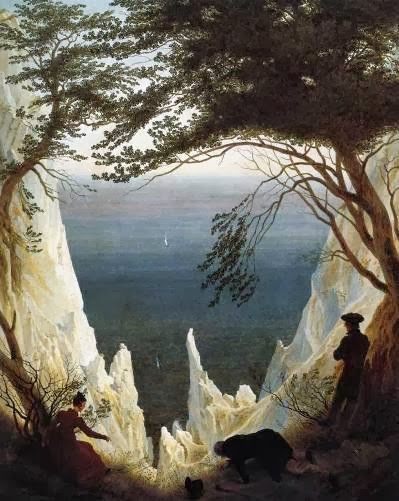
THE VERY RAPID CHANGE through which Western Europe is passing leads me to ask a question, the answer to which I conceive to be of moment to my generation.
Is it not possible that literature—the highest of merely human arts—will perish? We have inherited it from the past (including under that term times still within living memory). Till lately we thought it secure; we took it for granted. Is it now so sure?
The whole scheme of our lives is passing through a material revolution which (though each reacts on the other) is not the cause but the effect of a moral one. But people have hardly as yet appreciated the magnitude of the change.
Nearly all our finest matter in the way of letters has been produced under conditions of sufficient isolation in communion with the processes of nature and under conditions of sufficient ‘elbow room’ in time. One might draw up a category at random of a dozen situations or a hundred each of which has produced the highest verse and prose in the past: the silent contemplation of landscape, the slow journey by foot or horse, the contrast between the small city and its neighboring fields, the entry of a boat under sails into a harbor.
Take this last example, the entry of a sailing boat into the harbor. There is, in the diversity of experience, in its majesty of movement as a rule, or again in its rarer occasions of peril and stress, but especially in its consonance with the nonmechanical, not man-made forces around the boat, a particular quality which you will never find under conditions always similar and perpetually repeated precisely because they are mechanical; which you will never find in movements whereof the major parts depend on mechanism.
Now, at this point (it is a digression but it is pertinent) many will answer:—
‘What does it matter? If we live in a new world we will describe that new world just as our fathers described their world—which remained so much the same from the highest antiquity of civilization to but a few years ago. Our theme id infinite, just as their theme was infinite. We have, to excite our desire to produce, material as ample and as stimulating as anything they knew. There is no peril. Letters are safe. They will add to themselves a new and great chapter; that is all.’
To this objection I would answer:—
‘Description is not the point. Beauty is the point. How shall Beauty flourish in this new air?’
A writer who can only evoke reality is not a great writer. No one sustains the culture of mankind, or bequeaths it a great thing, because he merely registers an emotion or merely provokes one. A man speaking to men is great in proportion as he can call up the unseen, and clothe in definite substance, can incarnate, can render permanent our three dear old friends, the Good, the Beautiful, and the True—and especially the one in the middle. For while it is the business of the inspired to present the Good, and of philosophers to present the True, writers, like other artists, can at least support and complete the triple task by putting forth the Beautiful.
Well, how are you going to get that task accomplished under regular, exactly repeated, blind environments? How are you going to get it in the midst of a deafening metallic noise? How are you going to get it under conditions such that the processes stimulating you to description are too rapid for distillation of beauty as well as too violent, and, above all too mechanical?
In connection with this consider the tendency of all the modern social curve toward the destruction of leisure; not only of that occasional leisure which a man working, however hard, with his pen or at teaching or at any other liberal profession could always find in an older world, but of that more expanded leisure wherein flourished as in a native air the writer of every kind—the scholar, the romancer, the poet, the historian. It is not insignificant that the greatest historians have been men granted such full leisure by patronage or endowment or private fortune.
The time in which we live tends to destroy such amplitude of leisure not because, as its enemies vaguely say, it is a time of haste and fuss. To say that is to say something circular; to reaffirm instead of explaining. No, the time in which we live is tending to destroy the old conditions of amply sufficient leisure because it is chiefly concerned with the settling of that very difficult political problem, the insecurity and nervous ill ease of a nation occupied almost entirely in mechanical labor.
Mechanical labor, organized under highly centralized and very large groups of capital, whether these be privately owned or communally or coöperatively directed, is and ungrateful task. Men who never felt rebellious against the labor of the fields and the household are rebellious against industrial work. They are not happy, save in its absence, and they feel it unjust that certain among their fellow citizens can enjoy a leisure which they, bound to the industrial system, cannot enjoy. That sense of injustice it is imperative that we should remedy or the industrial machine will stop working. We are attempting to remedy it. But in doing so we are destroying the ‘social atmosphere’ of leisure. For this feeling of injustice is not so strongly felt against the very few and very large fortunes—moderate, but sufficient to secure leisure. Now, it was precisely this large body of moderate and secure fortunes which gave society as a whole its atmosphere of leisure. The tendency of the modern industrial system to enregiment the workers into a mechanical life for the advantage of comparatively few and very wealthy men does not menace an unstable future.
But what is unstable and is menaced, and what does seem to have little chance of survival, is the old, widely spread leisure of that cultivated middle class which gave us most of our verse and nearly all the best of our prose, and, what is essential to both, a certain social medium, present throughout the state, in which great verse and high prose can not only have their being, but can also be judged by a sound critical sense.
Note how to-day, when men ask, in some popular competition or other, who is the greatest writer in their scale, they reply—ninety-none out of a hundred of them—with the name of some one who is producing fiction which sells on an enormous scale to a class knowing little or nothing of true leisure. Some few of these Best Sellers are excellent writers; some mediocre in their art, most quite negligible. Under the old and true tests, literature was sifted through the appreciation of a leisured class large enough to judge securely and sufficiently widespread to give its tone to the commonwealth. That organic function in the state—the critical faculty which created fame and handed down the corpus of letters to posterity—is disappearing. Perhaps it is already lost.
Now, let it be granted that this is not an evil. Let it be granted that an ignorance of, and contempt for, beauty—as for truth and for good—can do not great harm to the commonwealth. Personally, I think this modern claim a contradiction in terms; but no matter; let us for argument’s sake admit that the loss of our old sense of loveliness is an advance. There still remains the really interesting historical point, whether we are not racing toward a period in which there will be a breach of continuity with the past. We may be on the edge of such a gulf far deeper, and with an effect more drastic, than the gulf of the early Dark Ages.
It has been very well said that no period tells, with regard to itself, what posterity will want to know. That is three-quarters of the difficulty in writing history. For instance, we, when we read of the fourth or fifth centuries, are interested in race and language. But the people of the time were interested in theology, and give us most meager and contradictory accounts of language and race. Or again, when we write of the seventeenth century, and of the great social and religious changes therein, we are interested in numbers. The people of the time only occasionally referred to numbers, and that in the roughest manner and with no statistical concern in their minds. They were occupied in the consideration of powerful persons and how such would act, and in the conflict of principles. They were not much bothered by majorities. And when we try to find out how the numbers stood we are baffled.
Well, the converse is true. Not only does the past not tell us what we want to know about it, but men lose interest in great patches of the past. They get completely out of touch with it. Hitherto this only happened for comparatively brief periods, as, for instance, the eclipse of feeling for the Gothic between the mid-sixteenth century and the very end of the eighteenth century. Does it not look as though we were about to enter a world in which men would first of all cease to understand, and soon after cease to take interest in, the emotions proceeding from leisure, the emotions proceeding from a life in consonance with nonmechanical and natural processes? Does it not look as though, after a certain amount of such indifference, we should lose all touch with, not some period of our past, but all our past? It is one of the many things which alarm me in a contemplation of the world into which I have survived.
…And that new Peril through Industrialism is symbolized by a new, inhuman noise.
I sat but a few weeks ago in an English garden of such beauty as only English gardens in South England still know. It was a deep summer evening in the late August of last year. The place was in the very depth of Hampshire field and wood, remote from any town or even village. It stood near a hamlet of a few roofs and the downs were about it. As I watched the divine bronze of the western sky drooping slowly to silence and the repose, a loud-speaker, some hundred yards away, more powerful than a company of men, bawled through its gigantic snout a Yankee nigger song of (to me, at least) a very novel barbarity. Even as this noise appalled the air there approached along the little English lane under the tall elm trees a noise increasingly in volume abominably. It recalled a machine gun, or, more closely, a riveting machine. It passed in a shattering assault of violence and hurled itself away. It was a motor bicycle; and there are a score of them within two miles of that secluded Eden, all in use perpetually.
Such murder is now everywhere admitted and received. It invades every remote acre and has taken root in the ancient solitudes. How, then, shall letters hold their own?
~Hilaire Belloc: In the New Statesman, London Independent Weekly. Republished in Littell's The Living Age, Jan. 15, 1930.
Subscribe to:
Posts (Atom)
Share This
